
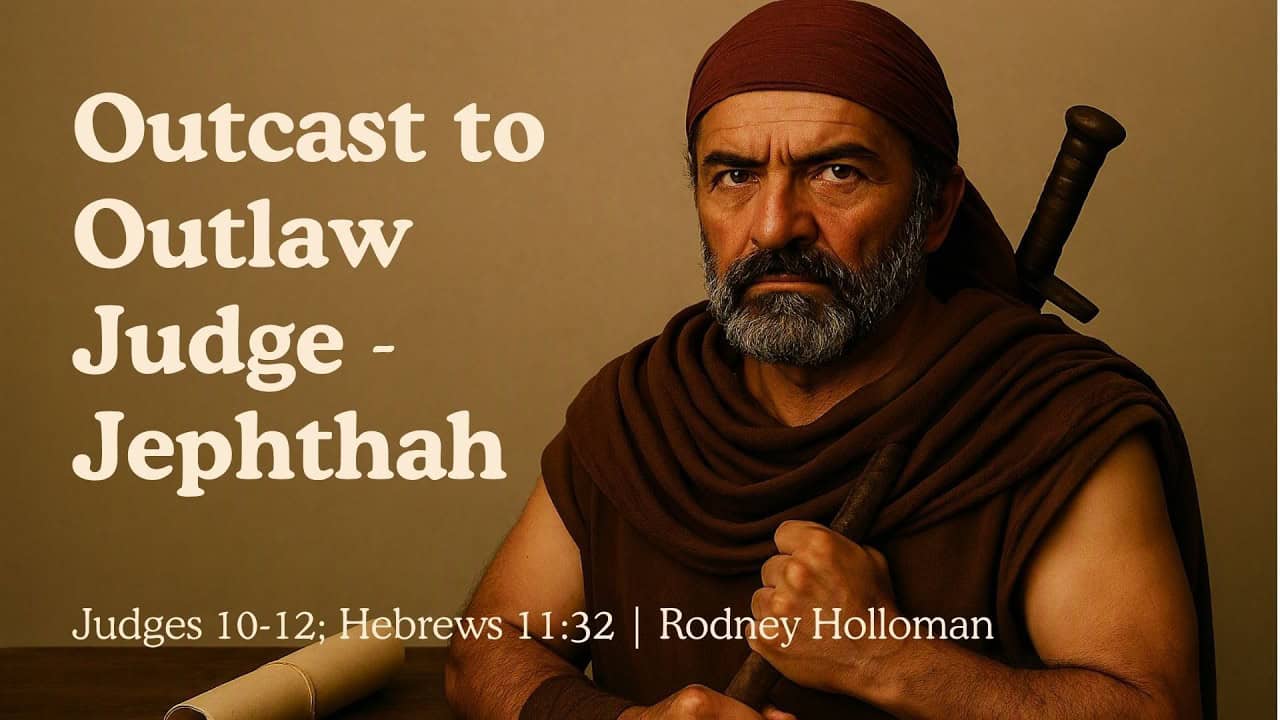
Outcast to Outlaw Judge – Jephthah | Judges 10-12 ; Hebrews 11:32
No King
Outcast to Outlaw Judge - Jepthah
Reject, Renegade, Rash
Judges 10-12 ; Hebrews 11:32
Cycle in Judges - Sin, Servitude, Supplication, Salvation, Silence
1. Israel's Greatest Problem Was Spiritual Unfaithfulness
Judges 10:6–16 45 years of peace Apostasy / Idolatry - 7 Fold Description
- Geographically
- Categorically
- Canaanization
The essence of idolatry is enjoying God’s gifts but not being grateful to the Giver, and Israel was guilty.
Comfortable living often produces weak character.
Whether in a nation or a local church, the absence of qualified leaders is often a judgment of God and evidence of the low spiritual level of the people.
Judges 10:11 - 18 years of suffering
Many people want freedom from consequences.
They do not want freedom from sin.
2. God Uses Broken People
Jephthah's story begins with rejection.
• Son of a harlot
• Rejected by brothers
• Driven away from home
Yet God uses him.
Jephthah is now “a mighty warrior”
Your past does not have the final word. Jesus does!
- Jephthah the Disowned (11:1–3)
- Jephthah the Desperado (11:4–11)
- Jephthah the Diplomat (11:12–28)
- Jephthah the Defender (11:29, 32–33)
- Jephthah the Doubter (11:30–31)
- Jephthah the Daddy (11:34–40)
3. Knowing About God Is Not The Same As Knowing God
Before battle Jephthah makes a vow.
A tragic vow. A foolish vow.
Why?
Because he appears to misunderstand God's character. The victory was already promised. Yet he tries to bargain with God.
Ignorance of God's Word and Person often leads to spiritual disaster.
4. Foolish Words & Vows Can Create Lasting Pain
- Jephthah Sacrificed His Daughter’s Life (A Dead Sacrifice)
- Jephthah Sacrificed His Daughter’s Future (A Living Sacrifice)
Words spoken foolishly can create wounds that last for years.
5. Great Faith Does Not Eliminate Human Weakness
Judges 12